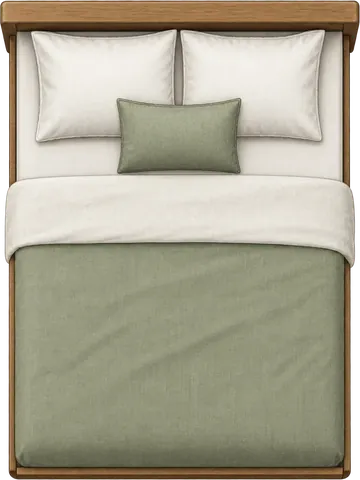
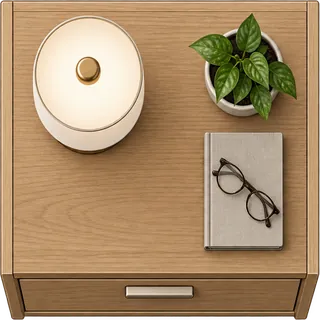

King bed + two nightstands
Center a king bed with a nightstand on each side before adding larger storage.
A larger bedroom gives you more options, but it also introduces more furniture decisions. Use this planner to compare king and queen beds, nightstands, storage, and work furniture in the same layout.
Start from a 12x14 room and compare layouts built around larger beds, bedside furniture, storage, and optional workspace.
Save or share an image of the exact room layout you created, including its dimensions, furniture positions and any spacing measurements you’re showing.
The larger room size makes more arrangements possible, so the useful question becomes how the bed, bedside furniture, storage, and optional desk relate to one another.
The wider king mattress can affect nightstand placement, wall space, and the room available for other furniture.
A bed may look centered until bedside furniture is added. Test the bed and nightstands together.
A dresser and a wardrobe can use very different amounts of floor depth even when they provide similar storage.
If the room also needs a desk or larger storage piece, add it to the planner and compare the measured spacing before committing.
Use these setups to compare the main tradeoffs in a larger bedroom, then change every furniture dimension to match the pieces you own or plan to buy.
Center a king bed with a nightstand on each side before adding larger storage.
Compare a king bed with a lower-depth dresser along the opposite side.
Use a queen when the room also needs a workspace and full-size storage.
Test the larger sleeping footprint with one main storage piece.
A larger room can still produce awkward furniture relationships. Measure the pieces as a complete arrangement rather than judging the bed by itself.
Bed frames can extend beyond mattress dimensions, especially around headboards and side rails.
Testing the pair shows the real width of the sleeping zone instead of just the mattress width.
A shallower dresser may preserve more separation from the bed than a deeper wardrobe.
Use spacing view once the main pieces are in place and check for door conflicts or furniture overlaps.
These room sizes are useful starting points when you want to compare larger-bedroom furniture arrangements.
168 sq ft · Rectangular bedroom
180 sq ft · Rectangular bedroom
192 sq ft · Rectangular bedroom
169 sq ft · Square bedroom
182 sq ft · Rectangular bedroom
196 sq ft · Square bedroom
224 sq ft · Rectangular bedroom
A useful starting point is to place the bed first, then add the nightstands and main storage before deciding whether the room also needs a desk or other furniture. The best arrangement depends on the room dimensions and door position.
Both can work. A king uses more width, while a queen leaves more room for bedside furniture, storage, or a workspace. Compare both in the planner using your actual room measurements.
That depends on the nightstand width. The King bed + two nightstands setup lets you test the full sleeping-zone width, and you can resize both nightstands to match your furniture.
Yes, if the desk fits the way you use the room. Load the Queen bed + desk + wardrobe setup, enter your real desk dimensions, and check the spacing around the work area and other furniture.
These pages approach the room from a different constraint: size, shape, work use, or larger-bedroom furniture.
Start from a 12x12 square bedroom, try several furniture orientations, and compare other square room sizes when you need a different scale.
Start from a 10x12 bedroom and compare full- and queen-bed setups with a desk, chair, and storage.
Start from a 9x10 room, compare several compact setups, and replace the preset furniture dimensions with your own measurements.
Start from one of the example arrangements, adjust the room and top-view furniture to match your space, set the door and window, and use spacing measurements to compare the layout before you move or buy furniture.