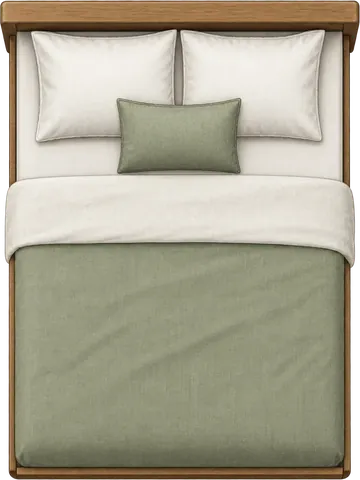
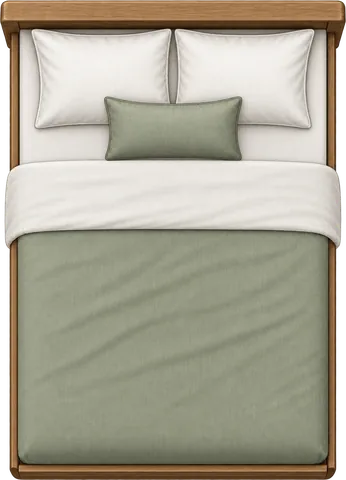
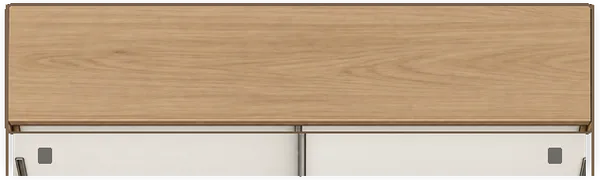

Full bed + wardrobe
Use the smaller bed footprint to keep a compact storage piece in the room.
Small bedrooms are less forgiving of furniture depth and bed width. Use the planner to test the pieces you actually need, then measure the spacing between nearby furniture before you buy or rearrange anything.
Start from a 9x10 room, compare several compact setups, and replace the preset furniture dimensions with your own measurements.
Save or share an image of the exact room layout you created, including its dimensions, furniture positions and any spacing measurements you’re showing.
In a compact room, the question is rarely whether one piece fits by itself. The useful check is what happens after the bed, storage, desk, and door all share the same floor plan.
Moving from a full to a queen bed adds width that can reduce the space available for a desk, wardrobe, or nightstand.
A shallow desk or wardrobe can work very differently from a deeper piece even when the widths are similar.
The door opening and swing can rule out placements that look possible from room dimensions alone.
Use spacing view after arranging the furniture to see the edge-to-edge distance between nearby pieces.
Load a setup, then resize and move the furniture to match your own room. The presets are starting points for comparing common small-bedroom tradeoffs.
Use the smaller bed footprint to keep a compact storage piece in the room.
Try a small workspace without moving up to the wider queen-bed footprint.
Compare the extra bed width while keeping one main storage piece.
Test whether a workspace still makes sense after moving up to a queen bed.
Use the planner with your real measurements so the decision is based on the room you have, not a generic floor plan.
Enter the wall dimensions, door position, door width, and swing direction first.
Use full, queen, or king presets as a starting point, then edit the dimensions if your frame is larger than the mattress.
Test the wardrobe, desk, nightstand, or other pieces that are part of the real purchase or rearrangement.
Check the measured distances between nearby items and resolve any furniture overlaps or door conflicts.
If your room matches one of these dimensions, open the exact-size planner with the room already set up.
80 sq ft · Rectangular bedroom
90 sq ft · Rectangular bedroom
99 sq ft · Rectangular bedroom
100 sq ft · Square bedroom
108 sq ft · Rectangular bedroom
110 sq ft · Rectangular bedroom
There is no single best bed size because the other furniture matters too. A full bed uses less floor area than a queen, while a queen gives you more sleeping width. Load both setups and compare the spacing after adding the storage or desk you need.
Often yes, but fitting inside the room boundary is only the first check. Add the other furniture, set the door position, and measure the spacing around the queen before deciding.
A compact desk can work in many small bedrooms. Use the Full bed + compact desk or Queen bed + compact desk setup, then enter the actual desk width and depth.
Start by comparing the footprint and depth of the largest pieces. A smaller bed, shallower desk, or more compact storage piece can create more separation between furniture without changing the room itself.
These pages approach the room from a different constraint: size, shape, work use, or larger-bedroom furniture.
Start from a 10x12 bedroom and compare full- and queen-bed setups with a desk, chair, and storage.
Start from a 12x12 square bedroom, try several furniture orientations, and compare other square room sizes when you need a different scale.
Start from a 12x14 room and compare layouts built around larger beds, bedside furniture, storage, and optional workspace.
Start from one of the example arrangements, adjust the room and top-view furniture to match your space, set the door and window, and use spacing measurements to compare the layout before you move or buy furniture.